Bobo doll experiment: We are social and community beings
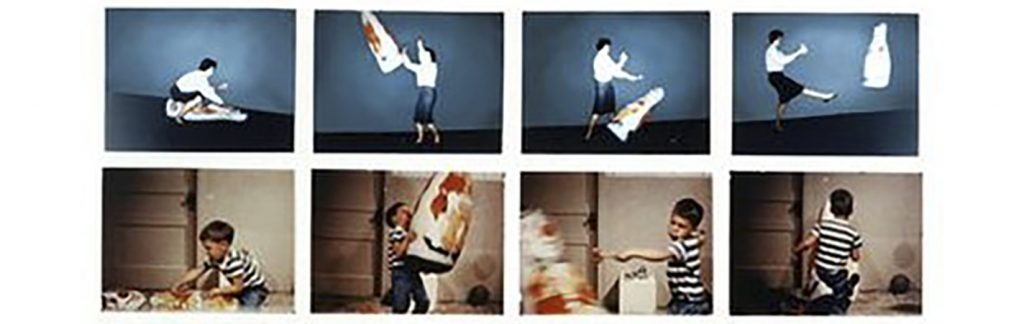
The article exposes the Bobo doll experiment, an experiment about behavior learning and social imitation where three groups of children were created. The first group would be made to see a person showing aggressive tendency while playing with toys. The second group, on the contrary, was made to see a person playing passively. Moreover, the third group, the control group, didn’t see no person playing at all. Then, the children were made to play their own with a tall, inflatable doll.
The results were clear: The children who were exposed to the aggressive model were more inclined to attack the doll physically and verbally, while the ones exposed to the non-aggressive model and the control group didn’t show much aggressive tendency.
The results bring interesting ideas. Firstly, it clearly demonstrates that being in a determined ambient influences our behavior and change our way of doing things. In my opinion, this proves that humans are social and community beings, that change their own way of acting unwittingly to be part of a group. Despite the subjects of the experiment were children, from my view, we can take its results legitimately, and understand that the fact that they are children not only does it not change the results, but it makes them more sincere, in behalf of the fact that children are free from prejudices and social typical behaviors.
In conclusion, the Bobo doll experiment evidences, with prejudice-free subjects, that humans relate with other humans through social imitation, and learn from others behaviors in group or community.